
Discovering the Precision of a Dial Tire Gauge

In the world of automotive maintenance, the dial tire gauge stands out as an indispensable tool for ensuring your vehicle's tires are properly inflated. This device, with its circular face and needle indicator, provides a straightforward and reliable way to monitor tire pressure, helping drivers avoid the pitfalls of underinflated or overinflated tires. Whether you're a daily commuter navigating bustling city streets or an adventurous road-tripper exploring winding highways, incorporating a dial tire gauge into your routine can make all the difference in safety and performance. Its mechanical simplicity appeals to those who appreciate hands-on reliability over digital alternatives, offering a tactile experience that feels both nostalgic and precise.
Understanding Mechanical Tire Pressure Gauges
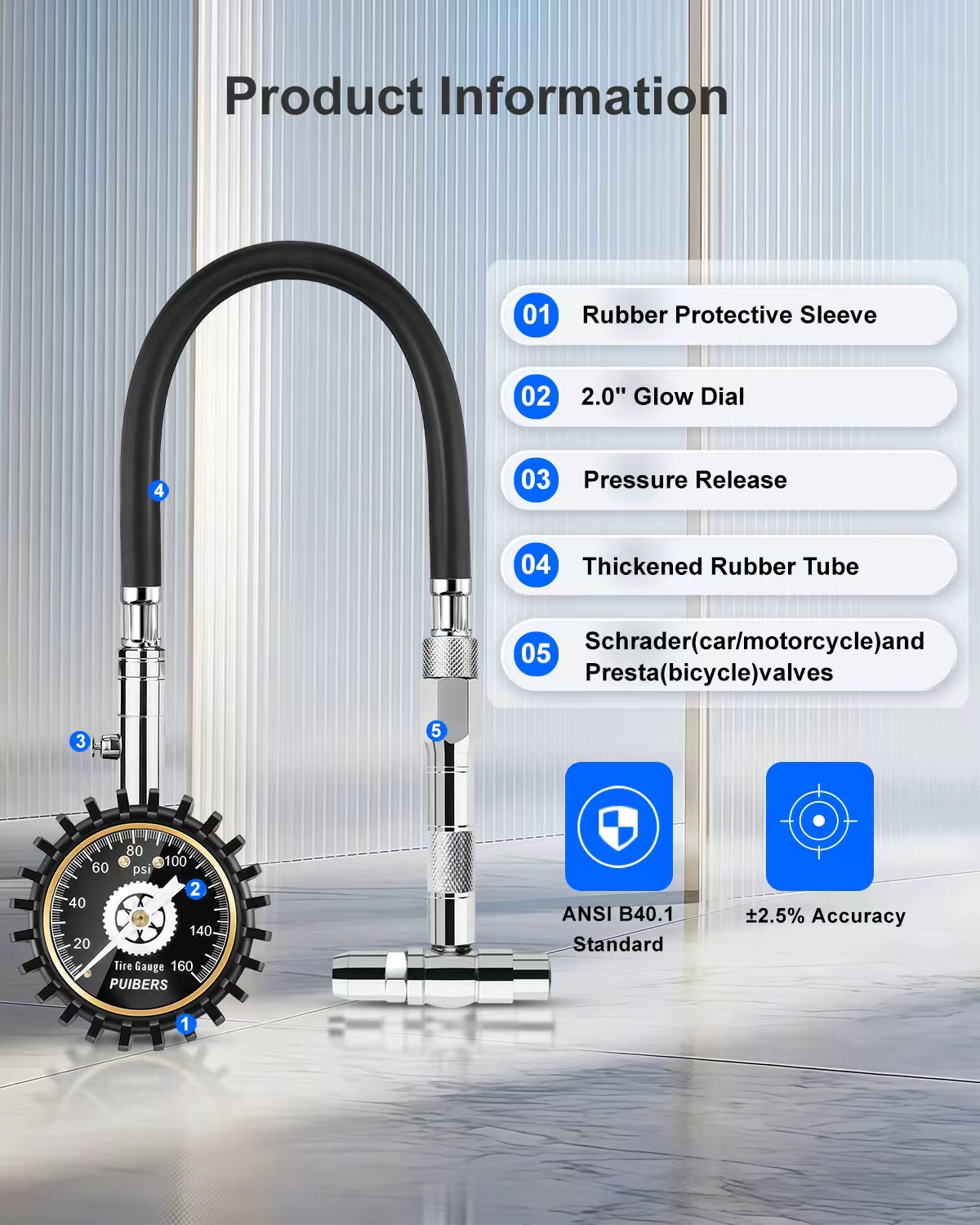
Delving deeper, a mechanical tire pressure gauge like the dial tire gauge operates on fundamental principles of physics, using a Bourdon tube mechanism that responds to air pressure by moving the needle across the dial. Picture this: as you press the nozzle against your tire's valve stem, compressed air flows into the gauge, causing the internal tube to uncoil slightly and translate that force into a readable measurement on the scale. This analog tire gauge design ensures durability, as it has no batteries to fail or screens to crack, making it ideal for garage use or emergency roadside checks. Unlike more complex systems, its straightforward construction means it's less prone to calibration drift, providing consistent readings over time. Enthusiasts often praise how the smooth sweep of the needle gives an immediate, visual confirmation of tire pressure measurement, fostering a sense of confidence in every reading.
The Advantages of an Analog Tire Gauge for Everyday Use
What truly sets the analog tire gauge apart is its user-friendly interface, which requires no powering up or menu navigation—just a quick attachment and read. Imagine pulling over on a quiet country road, the sun dipping low, and effortlessly gauging your tire pressures with a tool that's as reliable as the engine humming beneath your hood. For families traveling long distances, this car tire pressure gauge becomes a guardian of efficiency, preventing fuel waste from low pressures that can increase rolling resistance by up to 10%. Its compact size slips easily into glove compartments or tool kits, ready for impromptu inspections that keep your journey smooth. Moreover, the tactile feedback from twisting the valve and watching the needle settle encourages a hands-on approach to vehicle care, turning routine maintenance into an engaging ritual that enhances your connection to your car.
Mastering Tire Pressure Measurement Techniques
Effective tire pressure measurement begins with selecting the right moment—ideally when tires are cold, before you've driven more than a mile, to capture the most accurate baseline. With your dial tire gauge in hand, approach each tire methodically: remove the valve cap, firmly seat the gauge's chuck onto the stem, and listen for the brief hiss of escaping air that signals a proper seal. The needle will dance momentarily before stabilizing, revealing pounds per square inch (PSI) or bar readings calibrated to your vehicle's specifications, usually found on the driver's door jamb or owner's manual. This process, repeated for all four tires (and spares if equipped), not only safeguards against blowouts but also promotes even tread wear, extending tire life by thousands of miles. Visualize the satisfaction of seeing all gauges hover in the green zone, a testament to proactive care that translates to quieter rides and responsive handling on rain-slicked pavement or gravel paths.
Comparing Dial Tire Gauges to Digital Counterparts
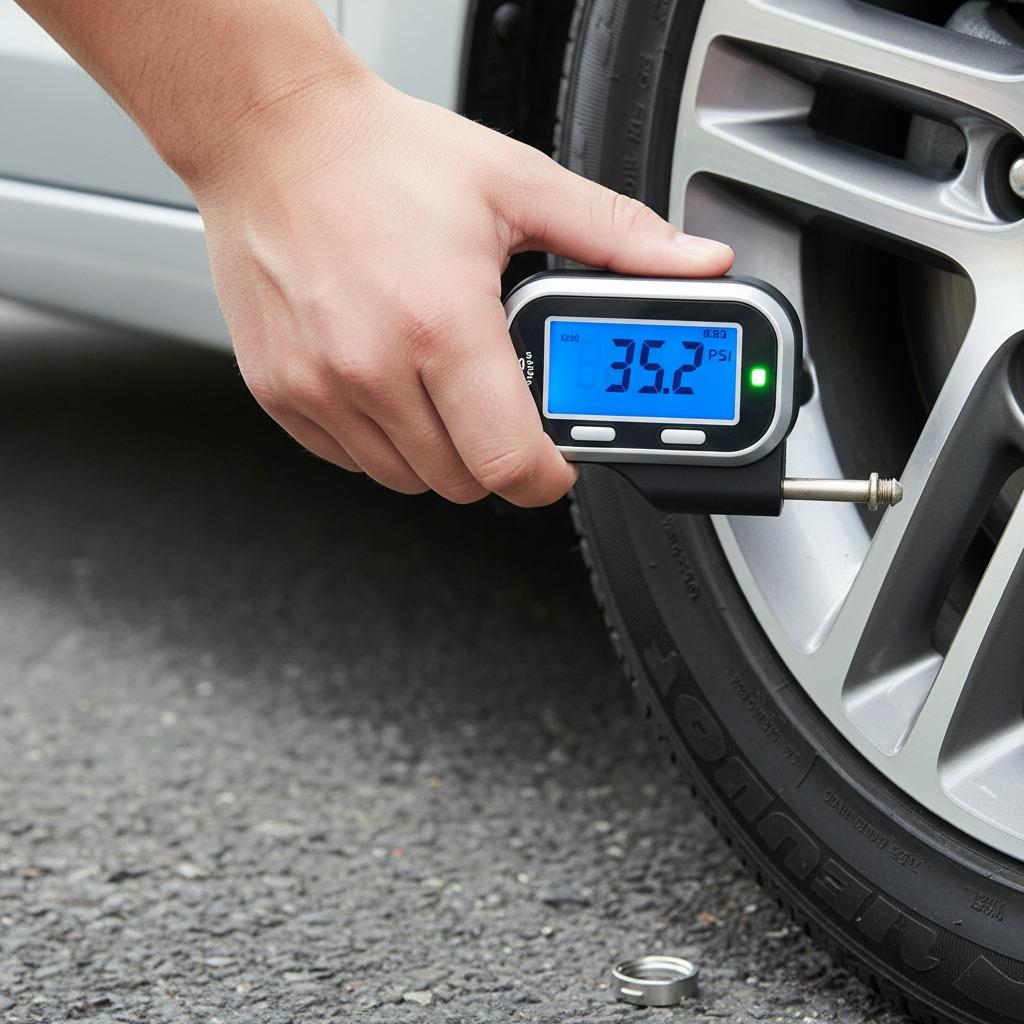
While digital gauges offer backlit displays and auto shut-off features, the charm of a mechanical tire pressure gauge lies in its unyielding accuracy without electronic interference. In harsh conditions—like freezing winters or sweltering summers—the analog tire gauge endures, its metal body shrugging off temperature extremes that might fog a digital screen. For professional mechanics or DIYers restoring classic cars, this car tire pressure gauge evokes the era of analog instrumentation, where every tick of the needle tells a story of pressure dynamics within the tire's rubber confines. It's not just about numbers; it's about the sensory details—the cool metal against your palm, the subtle click as it locks on, and the clear, illuminated dial under flashlight glow during night checks. This reliability fosters trust, ensuring that tire pressure measurement remains a precise art rather than a gamble on battery life.
Incorporating a Dial Tire Gauge into Your Maintenance Routine
To fully harness the benefits of your dial tire gauge, integrate it into a monthly ritual alongside oil checks and fluid top-offs. Start by noting your vehicle's recommended PSI, then methodically work around the car, jotting down variances that might indicate slow leaks or uneven loads. Over time, you'll notice patterns—perhaps the rear tires dip lower after heavy grocery runs—allowing you to anticipate and address issues before they escalate. This proactive stance not only boosts fuel economy by optimizing inflation but also sharpens your driving awareness, as properly gauged tires grip curves with assurance and brake with authority. Envision the peace of mind on a cross-country drive, knowing your analog tire gauge has verified every tire's readiness, turning potential hazards into seamless miles. For those with fleets or multiple vehicles, investing in a high-quality model with a wide range—up to 100 PSI—ensures versatility across sedans, trucks, and SUVs.
Why Choose a Dial Tire Gauge for Long-Term Reliability
Ultimately, the dial tire gauge embodies timeless engineering, a bridge between old-school mechanics and modern demands. Its robust build withstands drops and dings in busy garages, while the large, easy-to-read dial accommodates aging eyes or gloved hands in chilly weather. As you twist the reset knob to zero it before each use, you're participating in a tradition of precision that has kept vehicles rolling safely for decades. In an age of smart tech, this mechanical marvel reminds us that sometimes, the simplest tools deliver the most profound results—accurate tire pressure measurement that safeguards lives on the road. Whether stowed in your trunk for spontaneous adventures or displayed proudly in your workshop, the dial tire gauge is more than a gadget; it's a steadfast companion in the symphony of automotive care.
(Word count: 1024)