
In the world of automotive repair, manufacturing, and precision engineering, accuracy is not just a goal; it is a fundamental requirement. Every bolt, nut, and fastener on a piece of machinery has a specific tightness, or torque, required for optimal performance and safety. This is where a precision instrument like the mechanical torque wrench becomes an indispensable tool. It allows a technician to apply a specific rotational force to a fastener, ensuring it is tight enough to hold securely without being so tight that it damages the threads or the component itself. Under-tightening can lead to parts vibrating loose, while over-tightening can cause material failure, both with potentially catastrophic consequences. Therefore, understanding this tool is the first step toward professional and reliable work.
Understanding Different Torque Wrench Types
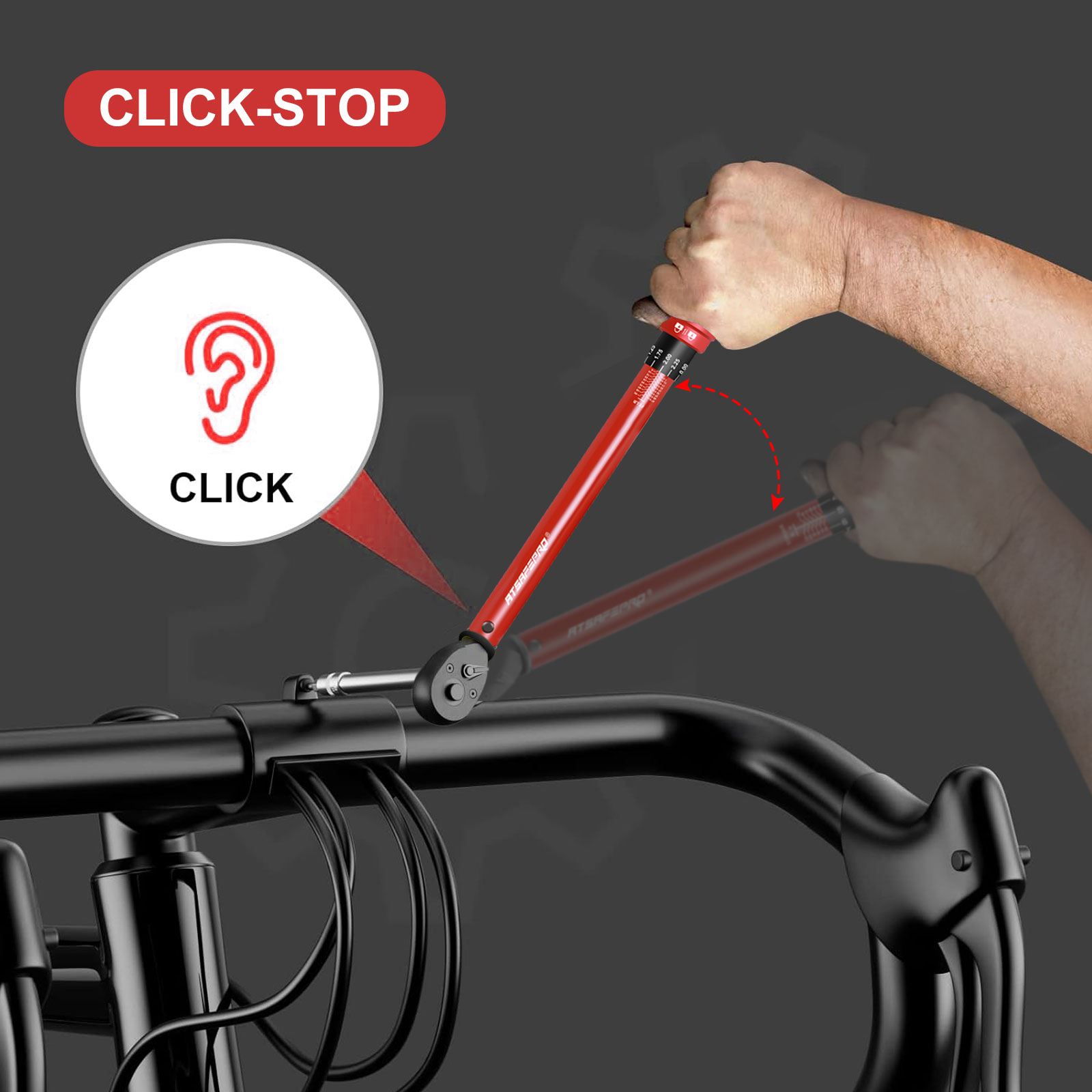
While the focus is often on the classic mechanical models, it is beneficial to understand the landscape of torque wrench types available. The most common is the click-type wrench, which uses an internal calibrated clutch mechanism. When the desired torque is reached, the clutch slips, creating a distinct click sound and a slight impulse that the operator can feel. Another simple form is the beam-style wrench, which features a pointer that moves along a scale as force is applied. Dial torque wrenches offer a similar visual cue but with a round dial for a more precise reading. There are also slip-type wrenches, designed to prevent over-torquing by 'slipping' once the preset torque is achieved, making them ideal for production lines. Each of these designs has its place, but the click-type remains a favorite for its balance of accuracy, ease of use, and durability in general workshop environments.
Digital vs Mechanical Torque Wrench: Which Is Right for You?
A common debate in modern workshops is the choice between a digital vs mechanical torque wrench. The traditional mechanical torque wrench is celebrated for its ruggedness and reliability. It requires no batteries, is less susceptible to damage from drops, and often comes at a more accessible price point. Its tactile feedback, the classic 'click', is something many experienced mechanics trust implicitly. On the other hand, digital or electronic torque wrenches offer a higher level of precision, often with audible and visual alerts (like beeps and flashing lights) as you approach the target torque. They can also offer advanced features like peak torque memory, multiple unit conversions (ft-lbs, Nm, in-lbs), and even data logging capabilities for quality control. The choice ultimately depends on the application. For critical, high-precision tasks or environments where data tracking is required, a digital wrench may be superior. For general automotive and field repairs, the robust and reliable nature of a mechanical wrench is often the preferred choice.
The Critical Role of Torque Wrench Accuracy
No matter the type, the single most important characteristic of a torque wrench is its accuracy. The entire purpose of the tool is to apply a measured force, and if that measurement is off, the tool is failing its primary function. Torque wrench accuracy is typically expressed as a percentage of deviation from the set value, for example, +/- 4%. This means that if you set the wrench to 100 ft-lbs, the actual torque applied will be between 96 and 104 ft-lbs. Inexpensive, low-quality tools can have much wider variance, which can lead to inconsistent and unsafe results. Consistently applying the correct torque ensures gasket seals are uniform, wheels are securely fastened, and engine components withstand the immense stresses they are subjected to. Investing in a tool with certified accuracy is not a luxury; it is a critical component of safe and professional workmanship.
Maintaining Precision: Torque Wrench Calibration
Even the most well-made tool can lose its precision over time. This is why regular torque wrench calibration is essential for maintaining accuracy. Calibration is the process of comparing the tool's output against a known, certified standard and adjusting it to bring it back within its specified tolerance. A torque wrench is a measurement device, and like any such device, it requires periodic verification. Most manufacturers recommend calibration after a certain number of cycles (e.g., every 5,000 clicks) or on a time-based schedule, such as once a year. Furthermore, if a wrench is ever dropped or subjected to a significant impact, it should be recalibrated immediately, as the internal mechanisms can easily be knocked out of alignment. Skipping torque wrench calibration is a gamble that can compromise the integrity of every fastener you tighten, making it a crucial aspect of tool ownership.
Following Torque Specification Guidelines
Having an accurate, calibrated torque wrench is only half the battle. The other half is knowing what value to set it to. This is where following manufacturer torque specification guidelines is paramount. These specifications are meticulously calculated by engineers to ensure optimal clamping force for a given fastener and material. You can typically find these values in the vehicle’s service manual or technical documentation for the equipment you are working on. It's important to follow these guidelines precisely, including any instructions regarding thread lubrication or the use of thread-locking compounds, as these can significantly alter the relationship between torque and clamping force. Ignoring these guidelines and simply tightening 'by feel' is a recipe for stripped threads, warped components, or parts that work themselves loose. Using the correct tool and the right specification together creates a foundation of reliability and safety for any mechanical assembly.