
Introduction to Pressure Gauges
Pressure gauges are essential instruments used across various industries to measure and monitor fluid or gas pressure in systems. These devices provide critical data that ensures safety, efficiency, and optimal performance in applications ranging from industrial machinery to automotive systems. Understanding the fundamentals of pressure gauges helps professionals select the right tool for their needs, preventing costly errors and enhancing operational reliability. This article explores the types, functionalities, and applications of pressure gauges, offering insights into their importance in modern engineering.
Understanding Analog Pressure Gauges
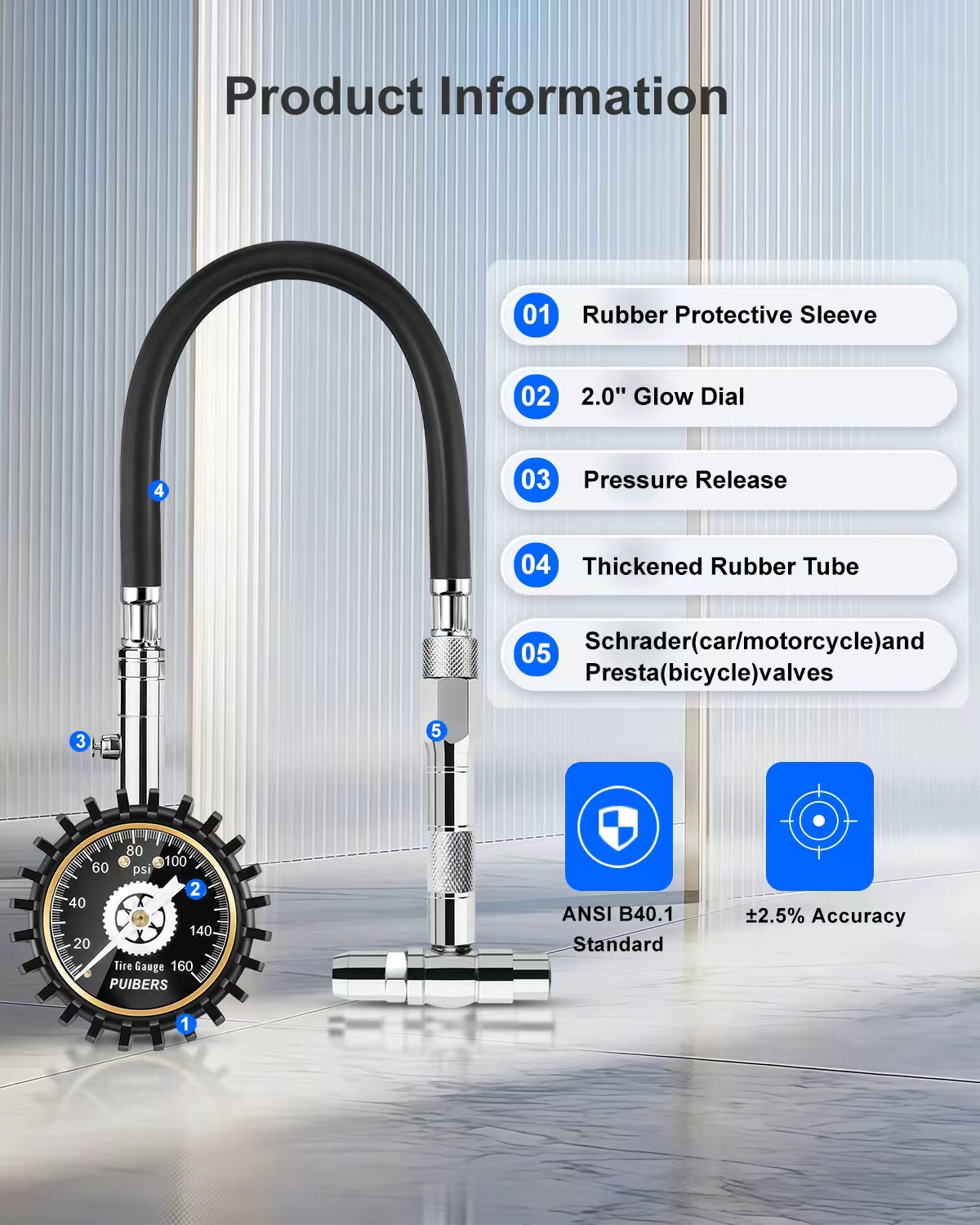
Analog pressure gauges represent a traditional yet reliable category of pressure measuring instruments. These devices use a mechanical needle and dial to display pressure readings, often resembling a clock face for easy interpretation. The Bourdon tube, a curved metal tube that straightens under pressure, is the core mechanism in many analog pressure gauges, converting pressure into mechanical movement. This design, invented in the 19th century, remains popular due to its simplicity, durability, and lack of need for external power sources. In environments where electrical interference could be an issue, such as in explosive atmospheres, analog pressure gauges offer a safe alternative. They are widely used in HVAC systems, where precise monitoring of refrigerant pressures prevents system failures. Statistics from the American Society of Mechanical Engineers indicate that analog models account for over 60% of installations in legacy industrial setups, highlighting their enduring relevance. When selecting an analog pressure gauge, factors like dial size, accuracy class (typically 1-2% full scale), and material compatibility with the medium being measured are crucial. For instance, stainless steel casings protect against corrosion in harsh chemical environments.
Exploring Different Pressure Gauge Types
Pressure gauge type varies significantly based on the application, with options including digital, diaphragm, and capsule varieties beyond the analog models. Digital pressure gauges incorporate electronic sensors, such as piezoresistive transducers, to provide precise numerical readouts on LCD displays, often with data logging capabilities. These are ideal for laboratories requiring high accuracy up to 0.1% of reading. Diaphragm pressure gauges, on the other hand, use a flexible membrane to isolate the sensing element from the process fluid, making them suitable for corrosive or viscous media like slurries in pharmaceutical processing. Capsule gauges, featuring two corrugated diaphragms welded together, excel in low-pressure measurements, down to microns of mercury, commonly found in vacuum systems. According to a report by MarketsandMarkets, the global pressure gauge market is projected to grow at a CAGR of 5.2% through 2026, driven by demand in oil and gas sectors where pressure gauge type selection directly impacts safety compliance with standards like ASME B40.100. Each pressure gauge type has specific advantages: analog for robustness, digital for precision, and specialized types like test gauges for calibration purposes. Engineers must consider pressure range (from vacuum to 100,000 psi), connection types (NPT threads or flanges), and environmental ratings (IP65 for dust and water resistance) to match the instrument to operational demands.
The Role of Custom Pressure Gauges in Specialized Applications
Custom pressure gauges address unique requirements that off-the-shelf models cannot meet, allowing for tailored designs in niche industries. These bespoke instruments can incorporate features like remote reading capabilities via telemetry or integration with IoT systems for real-time monitoring in smart factories. For example, in aerospace, custom pressure gauges might feature lightweight composites and extreme temperature tolerance from -200°C to 500°C. Pressure measuring instruments in this category often undergo rigorous customization processes, including material selection (e.g., Hastelloy for acidic environments) and calibration to specific standards like ISO 9001. A case study from a leading manufacturer shows that implementing custom pressure gauges in hydraulic systems reduced downtime by 30% through enhanced accuracy and durability. When designing custom pressure gauges, collaboration with experts ensures compliance with regulatory bodies like the FDA for medical applications, where sterility and precision are paramount. Moreover, advancements in 3D printing enable rapid prototyping of unique dial layouts or enclosures, accelerating development timelines. Businesses opting for custom solutions benefit from scalability, as initial designs can be adapted for mass production, optimizing costs over time.
Key Considerations for Selecting Pressure Gauges
Choosing the right pressure gauge involves evaluating several factors to ensure reliability and longevity. Start with the operating environment: for outdoor use, select gauges with weatherproof enclosures to withstand rain, dust, and temperature fluctuations. Accuracy is another critical aspect; while analog pressure gauges offer good general-purpose performance, digital variants provide superior resolution for critical measurements. Overpressure protection, such as snubbers or restrictors, prevents damage from pressure spikes, extending the instrument's lifespan. Maintenance is straightforward for most pressure gauges—regular zeroing and cleaning suffice—but custom pressure gauges may require specialized servicing protocols. Industry data from the Instrumentation, Systems, and Automation Society reveals that improper selection leads to 15% of instrumentation failures annually, underscoring the need for thorough assessment. Additionally, consider integration with control systems; many modern pressure measuring instruments support protocols like Modbus for seamless connectivity. By prioritizing these elements, users can leverage pressure gauges to enhance process control, reduce energy consumption, and improve overall system safety.
Applications and Future Trends in Pressure Measurement
Pressure gauges find applications in diverse sectors, from water treatment plants monitoring pipeline pressures to automotive diagnostics checking tire and brake systems. In renewable energy, wind turbine operations rely on these instruments to maintain optimal hydraulic pressures, contributing to efficiency gains. The evolution of pressure gauge type includes hybrid models combining analog reliability with digital interfaces, facilitating easier data analysis. Emerging trends point toward wireless pressure measuring instruments, enabling remote monitoring via mobile apps, which is particularly useful in offshore oil rigs. Sustainability drives innovation, with eco-friendly materials reducing the environmental footprint of manufacturing. As industries adopt Industry 4.0 principles, custom pressure gauges integrated with AI for predictive maintenance will become standard, minimizing failures proactively. In summary, pressure gauges remain indispensable, with their versatility ensuring continued relevance in an increasingly automated world. By staying informed on advancements, professionals can harness these tools to drive operational excellence.