
H1: How to Choose the Best Mechanical Tire Gauge for Safety
Introduction Proper tire pressure is critical for vehicle safety, fuel efficiency, and tire longevity. While digital gadgets are popular, professional mechanics and serious drivers often prefer the reliability of a mechanical tire gauge. In this guide, we will explore why a heavy-duty analog gauge is the superior choice for your glovebox and how to select the right one.
H2: 1. Why Choose Mechanical Over Digital? Many drivers assume "digital" means "better," but when it comes to emergency tools, reliability is king.
1.1 No Batteries Required (Always Ready) The biggest advantage of a mechanical gauge is that it never runs out of power. Digital gauges often have dead batteries after sitting in a cold car for months. A mechanical gauge uses a physical mechanism, meaning it is ready to work the moment you pick it up—whether it's -20°C or +40°C outside.
1.2 Superior Durability As shown in our product images, high-quality mechanical gauges feature solid brass or steel fittings . Unlike plastic digital gauges that can crack easily, these metal components are built to withstand the rough environment of a garage or trunk. 
H2: 2. Key Features of a High-Quality Gauge Not all gauges are created equal. When shopping for a tire pressure tool, look for these specific structural advantages:
2.1 The Shock-Resistant Guard
Gear-Style Rubber Cover: You will notice a rugged, gear-shaped rubber housing around the dial face. This isn't just for style; it provides essential shock absorption. If you accidentally drop the gauge on concrete, this guard protects the sensitive internal calibration from being knocked out of alignment.(
2.2 Flexible Hose and Swivel Chuck
o
360-Degree Access: Valve stems are often located in awkward positions. A gauge with a rigid stick can be hard to seat properly. Look for a reinforced flexible rubber hose with a swivel chuck. This allows you to attach the gauge to the tire valve at any angle while keeping the dial face visible to your eyes.
2.3 Readability and Range
High Contrast Dial: Whether you prefer a white background or a black background (as seen in the examples), clarity is key.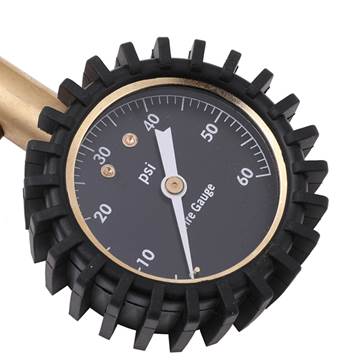
Pressure Holding Function: A quality mechanical gauge will hold the pressure reading even after you remove it from the valve, allowing you to bring it up to eye level to read comfortably. You then press the side button (bleeder valve) to reset it.
H2: 3. How to Use Your Gauge for Maximum Precision Having the right tool is only half the battle; using it correctly ensures safety.
3.1 Check When Tires are Cold
Always measure pressure before driving or at least 3 hours after parking. Driving generates friction and heat, which temporarily increases pressure. Measuring "hot" tires will give you a false reading, leading you to release air that the tires actually need.
3.2 The Seal is Crucial
Press the chuck firmly onto the valve stem. If you hear a hissing sound, air is escaping, and the reading will be inaccurate. Adjust the angle until the hissing stops instantly.
Conclusion A heavy-duty mechanical tire gauge is a small investment that offers peace of mind. By choosing a model with brass internals, a protective rubber guard, and a flexible hose, you ensure that every journey you take is safe and fuel-efficient.