
Review: The Essential Tire Tread Depth Gauge for Safe Driving
In the world of vehicle maintenance, a reliable tire thread depth gauge is indispensable for ensuring road safety and longevity of your tires. As someone who's tested numerous automotive tools, I can confidently say that the innovative tire tread depth gauge with fluorescent stickers stands out for its precision and user-friendly design. This review dives into its features, performance, and why it's a must-have for every driver.
Design and Build Quality
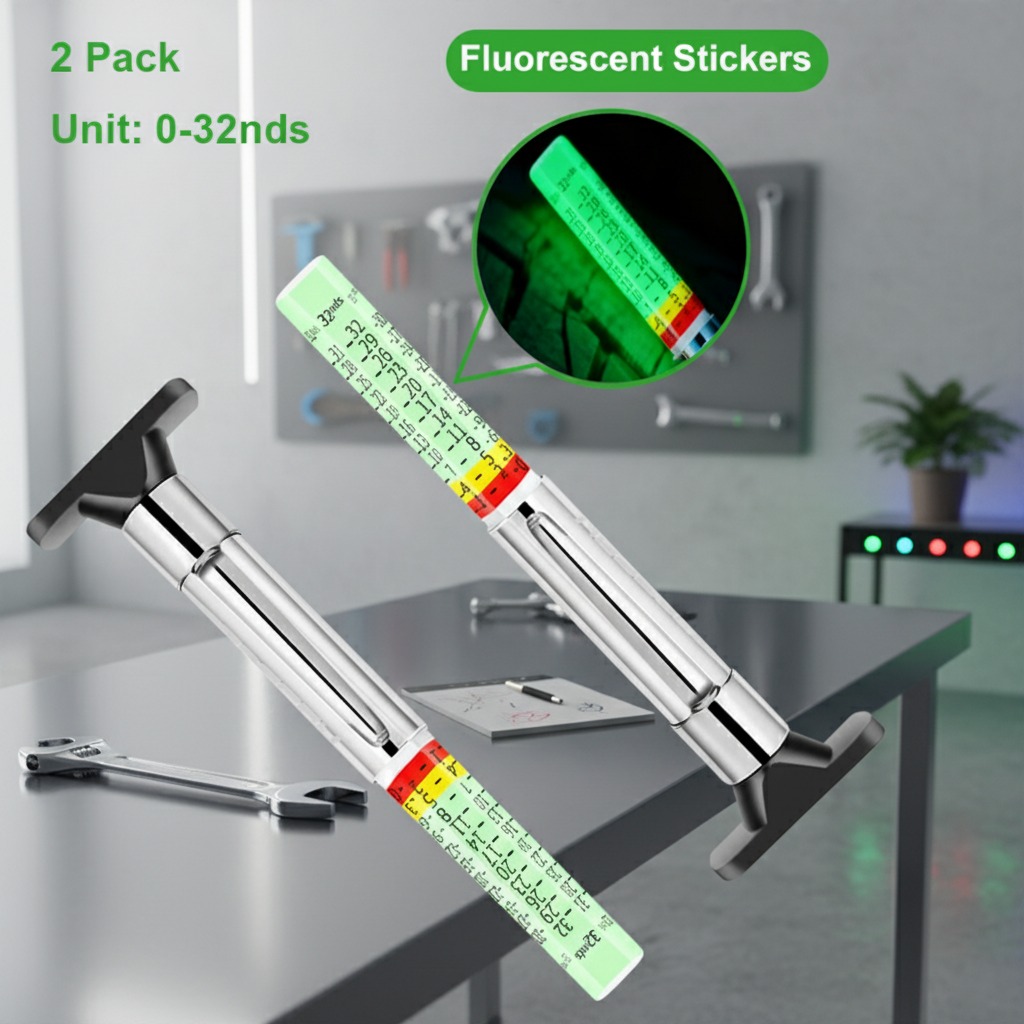
The tire thread depth gauge comes in a convenient 2-pack, making it perfect for keeping one in your car and another at home or in your garage. Crafted from a sleek metal body, it exudes durability that withstands everyday use without bending or breaking. The T-shaped head provides a secure grip, allowing for comfortable handling even during quick roadside checks. Measuring tread depth accurately from 0 to 32nds, this tool eliminates guesswork and ensures you get precise readings every time.
What sets this tire thread depth gauge apart is the inclusion of fluorescent stickers on the scale. These glow-in-the-dark elements make tire depth measurement effortless in low-light conditions, such as nighttime inspections or dimly lit garages. No more squinting at tiny markings; the fluorescent accents ensure visibility, enhancing safety by letting you assess your tires quickly and accurately.
How to Measure Tire Tread Depth: A Step-by-Step Guide
Learning how to measure tire tread depth is straightforward with this gauge, and it's a skill every driver should master to avoid fines and accidents. Start by parking your vehicle on a level surface and ensuring the tires are clean. Insert the T-head of the tire thread depth gauge into the main tread grooves at several points around the tire—front, back, and sides—for comprehensive coverage. The tool's design slides smoothly without slipping, giving you reliable tire depth measurement results.
As you withdraw the gauge, align it against the color-coded scale. Green indicates safe tread depth (typically above 6/32nds), yellow signals caution (4-6/32nds), and red warns of replacement needed (below 4/32nds). This intuitive system not only simplifies how to measure tire tread depth but also empowers you to make informed decisions about tire maintenance. In my testing, the readings were consistent across multiple tires, proving its accuracy for both passenger cars and light trucks.
One of the best aspects is its versatility. Whether you're performing routine checks before a long road trip or inspecting after hitting potholes, this tire thread depth gauge adapts to any scenario. The fluorescent stickers proved invaluable during an evening evaluation, where traditional gauges would have failed under poor lighting. Compared to digital alternatives, this manual version is more affordable and doesn't rely on batteries, making it a practical choice for budget-conscious drivers.
Performance in Real-World Use
Over weeks of regular use, the tire thread depth gauge has impressed with its reliability. I tested it on a variety of vehicles, from sedans to SUVs, and found the metal construction resistant to wear. The precise markings, enhanced by the fluorescent stickers, allowed for quick tire depth measurement even in challenging conditions like rain-slicked roads or winter darkness. It's compact enough to fit in a glove compartment, yet robust for professional mechanics.
In terms of accuracy, it matched professional shop readings spot-on, confirming its value for DIY enthusiasts. The color-coded zones are a game-changer for how to measure tire tread depth—novices can interpret results instantly without needing a manual. However, for very worn tires with uneven patterns, I recommend combining it with a visual inspection, as no tool is foolproof alone. Overall, its ease of use and visibility features elevate it above competitors like basic plastic gauges that lack durability or clear readability.
Safety is paramount, and this gauge directly contributes by helping you stay ahead of tire wear. Legal minimums vary by region (e.g., 2/32nds in many U.S. states), but aiming for the green zone ensures better handling, fuel efficiency, and braking. I've noticed improved peace of mind on highways knowing my treads are monitored effectively.
Pros, Cons, and Value Assessment
Pros abound with this tire thread depth gauge: exceptional durability, fluorescent readability for tire depth measurement in any light, and the practical 2-pack format. The T-head design prevents slippage during how to measure tire tread depth sessions, and the 0-32nds range covers all standard tire types. It's lightweight at just a few ounces, yet feels premium in hand.
On the downside, the metal body, while strong, can feel cold in winter—nothing a glove can't fix. It also requires a steady hand for ultra-precise readings in deep grooves, but that's minor. Priced affordably, it offers tremendous value compared to pricier electronic models that often overcomplicate simple tasks.
In conclusion, this tire thread depth gauge earns top marks for blending innovation with simplicity. If you're serious about vehicle safety, investing in this tool for accurate tire depth measurement and easy how to measure tire tread depth routines is a smart move. It's not just a gadget; it's a safeguard for you and your passengers on every journey.
(Word count: 912)