
How to Use a Tire Pressure Gauge for Optimal Vehicle Safety and Performance
Maintaining the correct tire pressure is essential for any vehicle owner, and a reliable tire pressure gauge is your best tool for this task. Whether you're hitting the road for a long trip or just commuting daily, checking your tires regularly can prevent accidents, improve fuel economy, and extend tire life. In this guide, we'll walk you through everything you need to know about using a tire pressure gauge, with a special focus on the innovative digital tire pressure gauge. These devices make the process quick, accurate, and hassle-free, ensuring you always have precise readings at your fingertips.
Understanding the Basics of a Tire Pressure Gauge
Before diving into the steps, it's important to grasp what a tire pressure gauge does. A tire pressure gauge measures the air pressure inside your vehicle's tires, typically in units like PSI (pounds per square inch), BAR, or kPa. Proper inflation levels are recommended by your vehicle's manufacturer and can usually be found on a sticker inside the driver's door or in the owner's manual. Underinflated tires can lead to poor handling and increased wear, while overinflation might cause uneven tread wear and reduced traction.
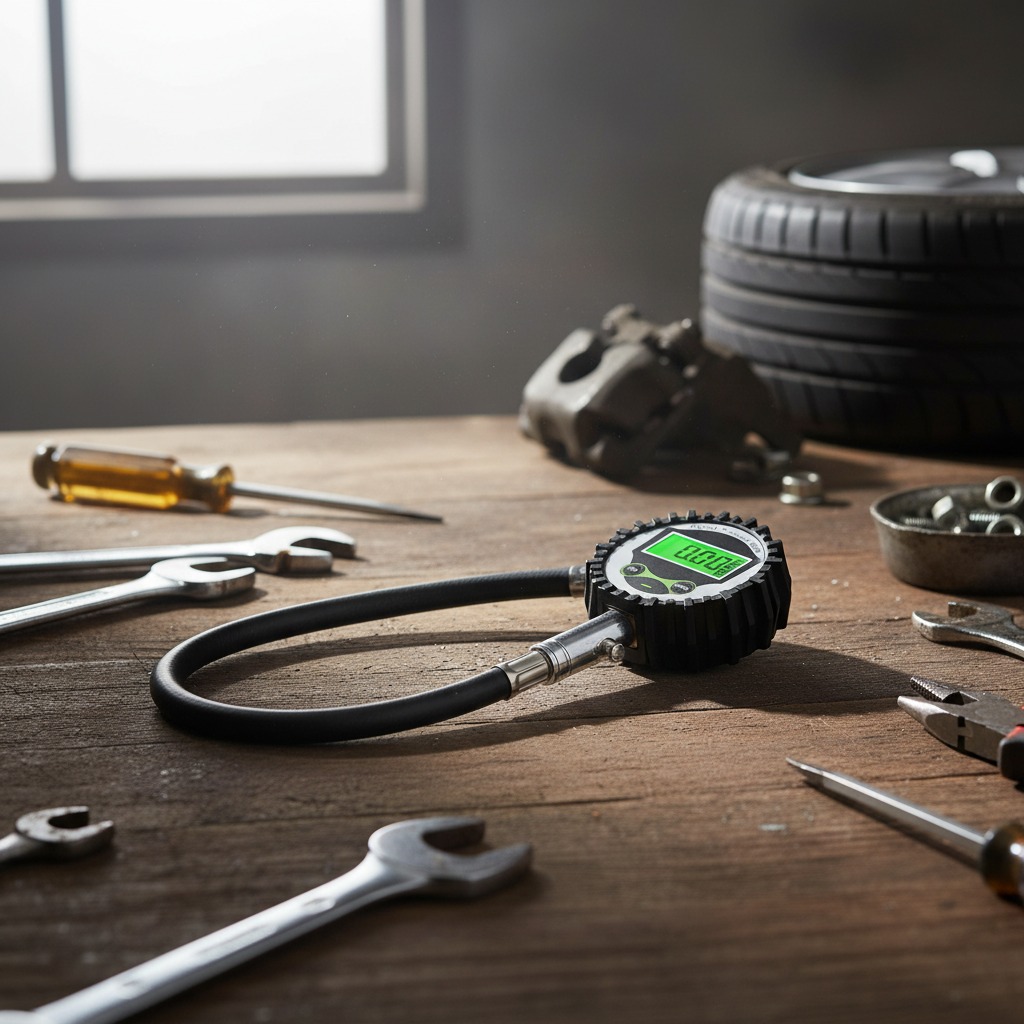
There are several types of tire pressure gauges available, from analog stick gauges to more advanced digital models. A digital tire pressure gauge stands out for its precision and ease of use. It features a clear LCD screen that displays readings instantly, often with backlighting for visibility in low light. Many models, like our featured Digital Tire Pressure Gauge, include auto-off functions to save battery life and the ability to switch between units effortlessly. This makes it ideal for both beginners and seasoned drivers who want reliable results without the guesswork.
To get started, always ensure your gauge is in good working condition. For a digital tire pressure gauge, check the battery—most use simple coin-cell batteries that last for hundreds of uses. If you're using a basic analog gauge, inspect for any damage to the stem or housing. Regular maintenance of your tire pressure gauge ensures accurate measurements every time.
Step-by-Step Guide to Checking Tire Pressure with a Tire Pressure Gauge
Now, let's get into the practical how-to. Follow these steps to check and adjust your tire pressure using a tire pressure gauge. This process should take no more than 10 minutes and is best done when tires are cold, meaning the vehicle hasn't been driven for at least three hours.
First, park your vehicle on a level surface and turn off the engine. Gather your tire pressure gauge, an air compressor or pump (if needed), and gloves if you prefer to keep your hands clean. Locate the valve stems on each tire—they're the small metal or rubber caps on the wheel rims. Remove the cap from the first tire and set it aside in a safe spot to avoid losing it.
Next, firmly press the tip of your tire pressure gauge onto the valve stem. For a digital tire pressure gauge, you'll hear a quick burst of air as it seals, and the reading will appear on the screen within seconds. Hold it steady for a couple of seconds to confirm the pressure. Note the number—our Digital Tire Pressure Gauge, for instance, provides readings accurate to 0.1 PSI, making it perfect for fine-tuning.
Compare the reading to the recommended pressure for that tire. If it's too low, attach your air pump hose to the valve stem and add air in short bursts, rechecking with the tire pressure gauge after each addition. Aim to stay within 2 PSI of the target. If it's too high, press the valve core with a small tool to release air gradually, again using your gauge to monitor. Repeat this for all four tires, including the spare if your vehicle has one accessible.
Throughout this process, the digital tire pressure gauge's flexible hose extension comes in handy, allowing you to reach awkward angles without straining. Its rubberized grip prevents slips, even if your hands are oily from the garage. Once done, replace all valve caps securely to keep dirt and moisture out.
Advanced Tips for Using a Digital Tire Pressure Gauge
To elevate your tire maintenance routine, consider these advanced tips tailored to a digital tire pressure gauge. First, leverage the multiple unit options. If you're traveling internationally, switch from PSI to BAR or kPa with just a button press—our Digital Tire Pressure Gauge makes this seamless, adapting to your needs on the go.
Second, track your readings over time. Many digital models allow you to store or log pressures, helping you spot patterns like slow leaks. Set a monthly reminder on your phone to check pressures, especially before long drives or seasonal changes when temperature fluctuations can affect inflation.
Third, invest in a quality digital tire pressure gauge for long-term reliability. Look for features like bleed valves for easy deflation and ergonomic designs that fit comfortably in your hand. The robust casing on devices like the Digital Tire Pressure Gauge withstands drops and daily use, ensuring it becomes a staple in your toolkit.
Safety is paramount, so always wear eye protection when inflating tires, as overpressure can cause bursts. If you notice consistent discrepancies in readings across tires, it might indicate a deeper issue like a puncture—consult a professional mechanic.
Why Regular Tire Pressure Checks Matter and How a Digital Tire Pressure Gauge Helps
Incorporating a tire pressure gauge into your routine isn't just about compliance; it's about enhancing your driving experience. Properly inflated tires can improve fuel efficiency by up to 3%, according to the U.S. Department of Energy, saving you money at the pump. They also reduce the risk of blowouts and improve braking performance, keeping you and your passengers safer on the road.
A digital tire pressure gauge takes this a step further by eliminating human error common with analog tools. Its instant digital readout means no squinting at tiny scales or second-guessing. For fleet managers or parents with multiple vehicles, this efficiency multiplies, ensuring every tire is checked without hassle.
In professional settings, such as trucking or racing, precision is non-negotiable. A digital tire pressure gauge provides the data needed for optimal performance, whether adjusting for load weight or track conditions. Even for everyday use, it empowers you to maintain your vehicle like a pro.
Finally, remember that tire pressure isn't a set-it-and-forget-it task. Temperature drops of 10 degrees can reduce pressure by about 1 PSI, so winter checks are crucial. By making a digital tire pressure gauge your go-to tool, you're investing in longevity for your tires and peace of mind for your journeys.
Choosing the Right Tire Pressure Gauge for Your Needs
When selecting a tire pressure gauge, prioritize accuracy, durability, and usability. Analog gauges are affordable and simple but can be less precise. A digital tire pressure gauge, however, offers superior technology with features like auto-calibration and memory functions.
Consider your usage: for occasional checks, a basic digital model suffices, but for frequent use, opt for one with a long hose and bright display. Budgets range from $10 for entry-level to $50 for premium options like the Digital Tire Pressure Gauge, which balances cost with high-end features.
Read reviews and check compatibility with your vehicle's valve types—most modern gauges handle both metal and rubber stems. With the right tire pressure gauge in hand, you'll master tire maintenance effortlessly, ensuring your vehicle performs at its best.
In summary, a tire pressure gauge is indispensable for safe driving, and a digital tire pressure gauge elevates the experience with precision and convenience. Follow these steps consistently, and you'll notice the difference in handling, efficiency, and overall vehicle health.