
## The Importance of a Tire Pressure Gauge
### Safety First
- Underinflated tires increase the risk of blowouts, especially at high speeds.
- Overinflated tires reduce traction and lengthen braking distance.
- Statistics show that about 25% of traffic accidents are related to tire issues, most of which are caused by improper tire pressure.
### Economy & Environmental Benefits
- Correct tire pressure reduces rolling resistance, improving fuel efficiency by 3-5%.
- Extends tire lifespan by 20-30%.
- Reduces CO₂ emissions, making it more environmentally friendly.
## Types of Tire Pressure Gauges
### 1. Analog (Mechanical Dial) Gauges
- **Pros**: Simple structure, affordable, no battery required.
- **Cons**: Relatively lower accuracy, susceptible to vibration.
### 2. Digital Gauges
- **Pros**: Clear readings, high precision, some with backlighting.
- **Cons**: Requires batteries, higher cost.
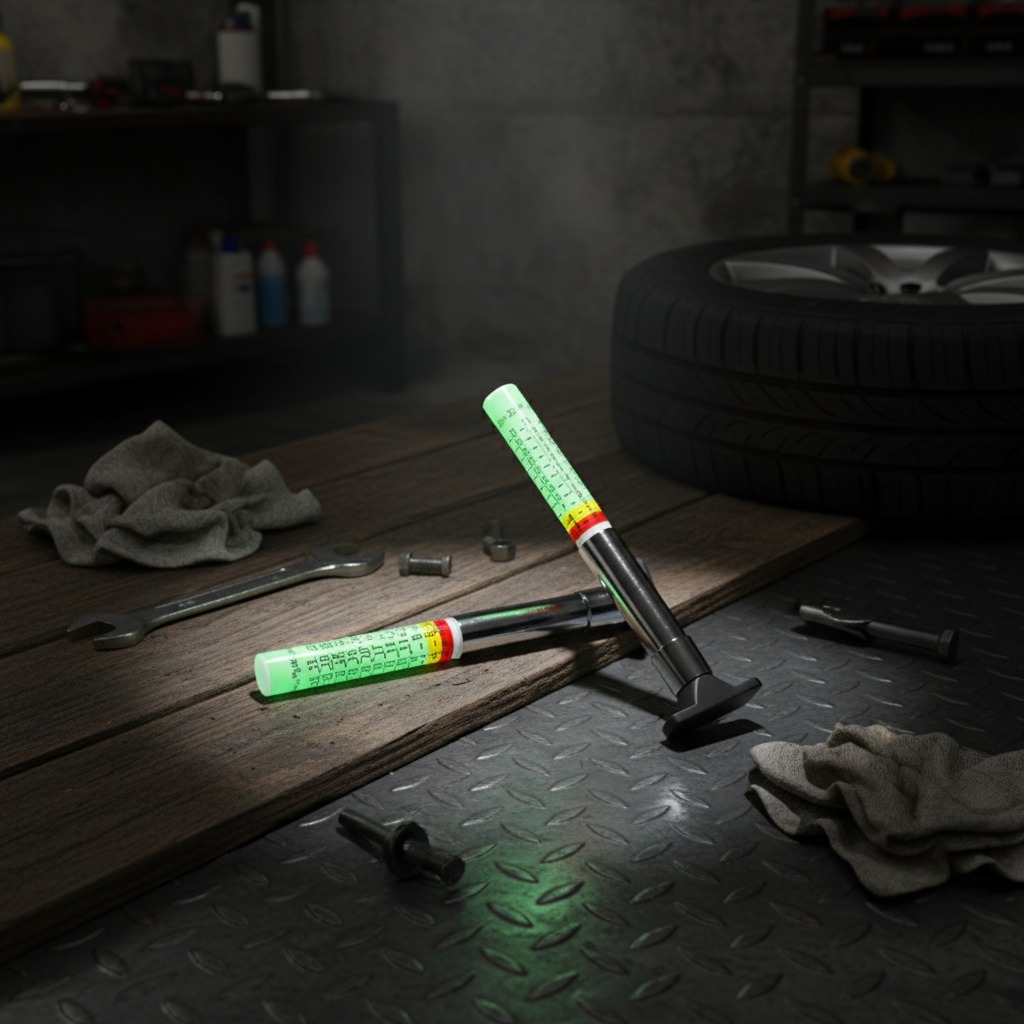
### 3. Pen-Type Gauges
- **Pros**: Compact and portable.
- **Cons**: Limited measurement range, average accuracy.
### 4. Tire Pressure Monitoring Systems (TPMS)
- **Pros**: Real-time monitoring, no manual measurement needed.
- **Cons**: Higher cost, requires professional installation.
## How to Use a Tire Pressure Gauge Correctly
1. **Timing**: Measure when tires are cold (after parking for at least 3 hours or driving less than 2 km).
2. **Steps**:
- Remove the valve cap.
- Press the gauge firmly and vertically onto the valve stem.
- Read the stabilized pressure value.
- Compare with the vehicle’s recommended pressure.
3. **Frequency**: Check at least once a month, and always before long trips.
## Buying Guide
- **Accuracy**: Choose a gauge with an error margin within ±1 psi.
- **Range**: Ensure it covers your vehicle’s required range (typically 15-50 psi for passenger cars).
- **Features**: Consider additional functions like a deflation valve, backlight, or unit switching.
- **Brand**: Opt for reputable brands (e.g., Michelin, Goodyear, Accutire) for better reliability.
## Common Misconceptions
1. **Visual Inspection**: Modern tire designs make slight underinflation hard to detect by eye.
2. **Relying on Gas Station Gauges**: These may be inaccurate or poorly maintained.
3. **Ignoring the Spare Tire**: Spare tires also need regular pressure checks.
4. **Uniform Pressure**: Front and rear tires, as well as different load conditions, may require different pressures.
## Conclusion
A small tire pressure gauge plays a big role in driving safety. Developing the habit of checking tire pressure regularly not only protects you and your family but also saves on vehicle costs. Check your tire pressure now—this small action might prevent a potential accident.
**Safe driving starts with proper tire pressure!**