
Understanding the Rubber Air Hose and Its Essential Role
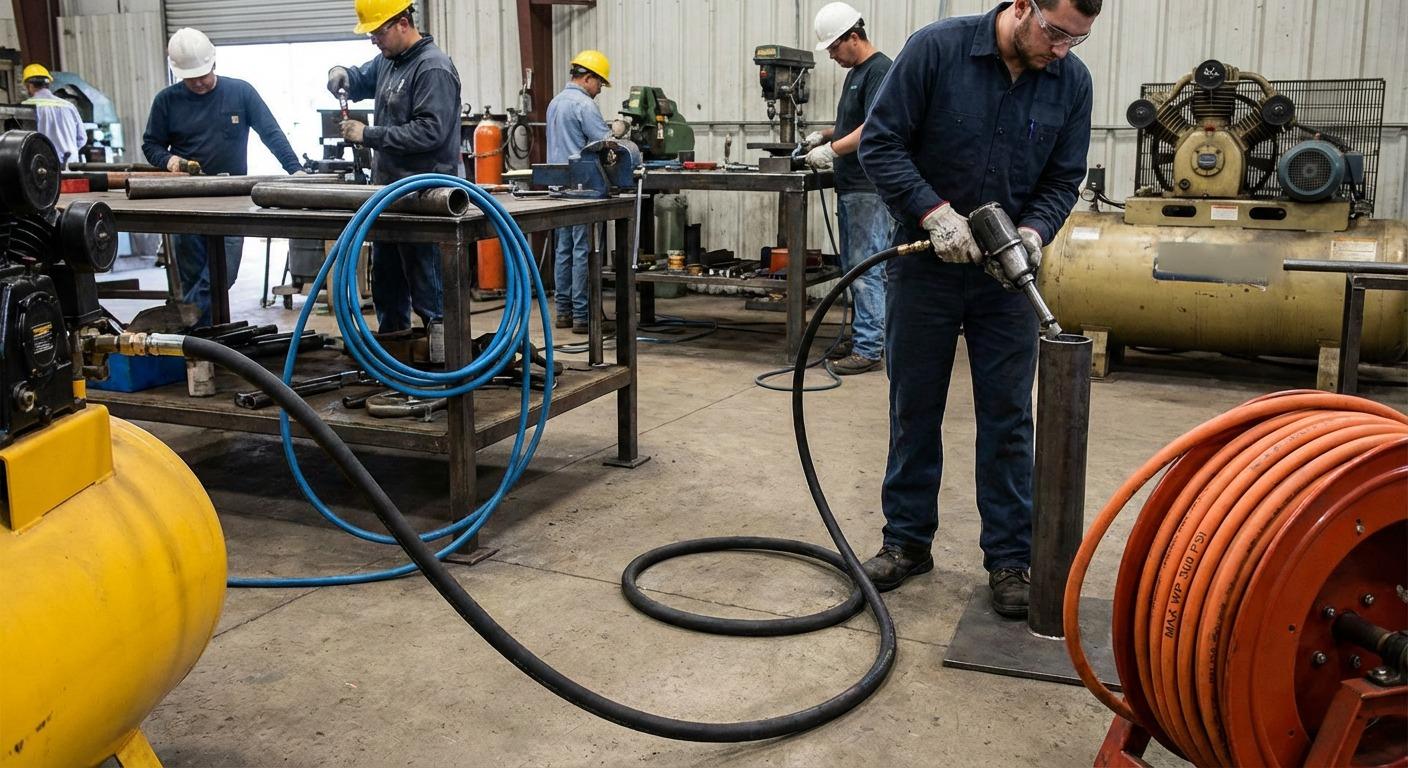
A rubber air hose is a vital component in various industrial and DIY applications, providing a reliable conduit for compressed air. Made from durable rubber materials, it withstands pressure and environmental factors, making it a go-to choice for professionals and hobbyists alike. In this article, we'll explore the features of the rubber air hose, its related variants like the air compressor hose, high-pressure rubber hose, and flexible air hose, and why it's indispensable in pneumatic systems.
The design of a rubber air hose typically includes reinforced layers to handle internal pressures without bursting. This flexibility allows it to navigate tight spaces while delivering consistent airflow. Whether you're powering tools in a workshop or inflating tires at a service station, selecting the right rubber air hose ensures safety and efficiency. Its resistance to abrasion and chemicals further extends its lifespan, reducing replacement costs over time.
Key Features of the Air Compressor Hose
The air compressor hose is a specialized type of rubber air hose engineered specifically for connecting air compressors to pneumatic tools. It features a robust construction that can manage the high velocities of air from compressors, preventing kinks that might restrict flow. Available in various lengths and diameters, the air compressor hose accommodates different setup needs, from portable units in garages to heavy-duty systems in factories.
One standout attribute of the air compressor hose is its coupling compatibility, often equipped with standard fittings like NPT or quick-connect ends for seamless integration. This makes swapping tools effortless, boosting productivity during tasks such as sandblasting or painting. Additionally, many models incorporate safety valves to release excess pressure, minimizing accident risks. When choosing an air compressor hose, consider the compressor's PSI rating to match the hose's capacity, ensuring optimal performance without strain.
Durability is paramount in an air compressor hose, as it endures constant flexing and exposure to oils or debris. High-quality options use synthetic rubber blends that resist cracking from UV light or temperature extremes, ideal for outdoor use. Regular inspection for wear, such as checking for bulges or soft spots, can prevent failures that lead to downtime. By investing in a reliable air compressor hose, users can maintain a steady air supply, enhancing the overall efficiency of their compressed air operations.
Advantages of the High-Pressure Rubber Hose
For demanding environments requiring robust performance, the high-pressure rubber hose stands out as an advanced iteration of the rubber air hose. Designed to operate at elevated PSI levels, often exceeding 300, it suits applications like hydraulic assists or heavy machinery where standard hoses would falter. The high-pressure rubber hose employs multi-ply reinforcement, such as textile braids or steel wires, to contain immense forces while remaining lightweight.
Safety is a primary concern with high-pressure rubber hoses, as they must comply with standards like those from the Rubber Manufacturers Association. These hoses often include color-coded markings to indicate pressure ratings, aiding quick identification on job sites. In industries such as construction or automotive repair, the high-pressure rubber hose powers jackhammers or impact wrenches without compromise, delivering forceful bursts of air precisely when needed.
Maintenance for a high-pressure rubber hose involves periodic testing for integrity, especially after prolonged storage. Avoiding sharp bends and using protective sleeves can extend its service life significantly. Compared to metal alternatives, the high-pressure rubber hose offers superior flexibility, reducing fatigue on connections and allowing easier maneuvering in confined areas. This makes it a preferred choice for professionals who prioritize both strength and adaptability in their toolkit.
Exploring the Flexible Air Hose for Versatile Use
The flexible air hose, another variant of the rubber air hose, emphasizes maneuverability and ease of handling in dynamic work scenarios. Constructed with softer rubber compounds, it bends without kinking, ideal for routing around obstacles in workshops or assembly lines. The flexible air hose typically features a smooth inner lining to minimize friction and maximize air volume transfer, ensuring tools receive full power.
In practical terms, a flexible air hose shines in mobile applications, such as mobile tire services or event setups requiring temporary air lines. Its lightweight nature reduces user fatigue during extended use, while anti-static properties in some models prevent sparks in sensitive environments like painting booths. Sizing a flexible air hose correctly—balancing inner diameter with length—prevents pressure drops, maintaining consistent tool performance over distances up to 100 feet.
Versatility extends to the flexible air hose's compatibility with various fittings, from brass nipples to plastic adapters, broadening its utility across tasks. For storage, coiling it loosely on reels preserves shape and prevents material degradation. Users appreciate how the flexible air hose adapts to irregular surfaces, providing a reliable air pathway without the rigidity of harder materials. This adaptability makes it essential for anyone dealing with pneumatic equipment in non-linear workspaces.
Comparing Types and Selecting the Right Rubber Air Hose
When deciding between an air compressor hose, high-pressure rubber hose, or flexible air hose, consider the specific demands of your application. A rubber air hose serves as the foundational option for general use, but specialized versions enhance performance in targeted scenarios. For instance, if your setup involves standard workshop tools, an air compressor hose offers balanced durability and ease. High-stakes operations, however, demand the reinforced build of a high-pressure rubber hose to handle extreme conditions safely.
The flexible air hose excels in scenarios requiring constant repositioning, providing agility without sacrificing reliability. Factors like operating temperature, chemical exposure, and required length influence the choice, ensuring the selected rubber air hose aligns with safety protocols. Always opt for products certified by relevant bodies to guarantee quality, as subpar hoses can lead to leaks or bursts, posing hazards.
In conclusion, the rubber air hose and its variants—air compressor hose, high-pressure rubber hose, and flexible air hose—form the backbone of efficient pneumatic systems. By understanding their unique strengths, users can select options that optimize workflow, enhance safety, and reduce long-term costs. Whether for professional or personal projects, investing in a quality rubber air hose pays dividends in performance and peace of mind. With proper care, these hoses deliver years of dependable service, powering everything from simple inflations to complex industrial processes.