
How to Choose a Tire Pressure Gauge: A Complete Guide for Every Driver
Maintaining proper tire pressure is one of the simplest yet most crucial steps to keep your vehicle safe, improve fuel efficiency, and extend tire lifetime. But even the best tire care routine starts with a reliable tire pressure gauge—and with so many options on the market, picking the right one can feel overwhelming. Do you need a digital or mechanical gauge? Should it have a hose? What about the valve stem type?
Don’t worry—we’re breaking down all the key factors to consider, plus the differences between popular gauge types, so you can choose the perfect tool for your needs. Whether you’re a daily commuter, off-roader, or truck driver, this guide has you covered.
1. Digital vs. Mechanical Tire Pressure Gauges
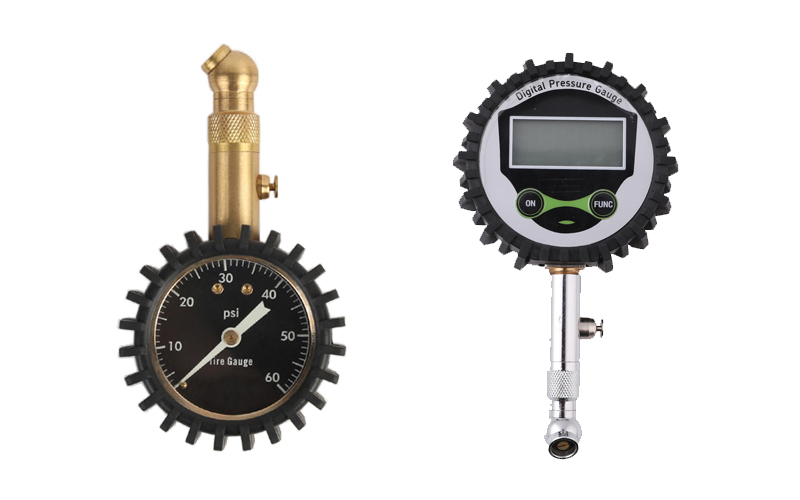
The first big decision is between digital (electronic) and mechanical (analog) gauges. Both get the job done, but they have distinct pros and cons based on accuracy, convenience, and durability.
Mechanical Tire Pressure Gauges
-
Accuracy: Standard accuracy ranges from 2% to 3%, we also can make it reach 1% to 2%—plenty precise for most everyday drivers.
-
Battery-Free Convenience: No batteries required! You’ll never deal with dead batteries or power anxiety, which makes them perfect for emergency kits or long road trips.
-
Durability: While sturdy, they’re not as shock-resistant as digital gauges. Dropping them frequently may affect their accuracy over time.
-
Affordability: One of their biggest perks—mechanical gauges are typically more budget-friendly than digital alternatives.
Digital Tire Pressure Gauges
-
Superior Accuracy: Most digital gauges have a standard accuracy of 1%, we also can make it 0.5%.
-
Battery Requirement: They run on 2 x 3A batteries (easy to find, but you’ll need to keep spares on hand to avoid unexpected downtime).
-
Shock Resistance: Digital gauges are generally more shock-resistant than mechanical ones, making them a better choice if you’re prone to dropping tools or using them in rough conditions.
- 4 pressure units: Psi, Bar, Kgf/cm 2, KPa, you can choose the units you like.
-
Price: Slightly more expensive than mechanical gauges, but the added accuracy and ease of use are worth it for many drivers.
2. With or Without a Hose?
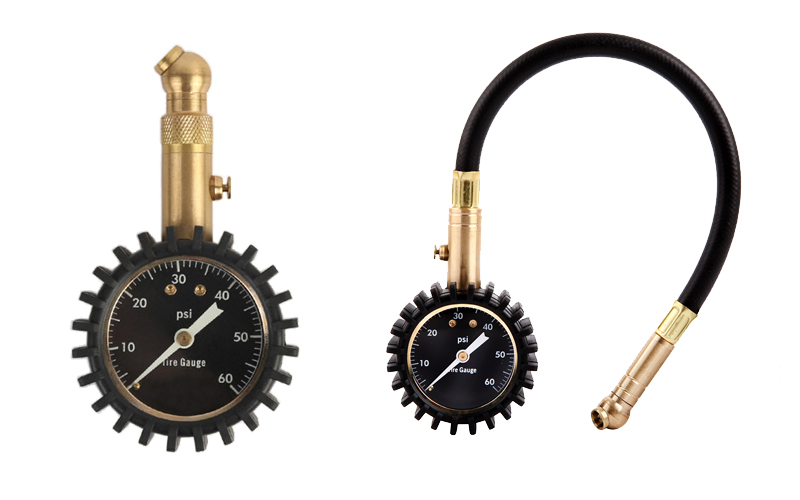
Another key feature to consider is whether the gauge has a hose. This comes down to convenience and how you plan to use it.
Hose-Free Gauges
-
Portability: Compact and lightweight, hose-free gauges are easy to store in your box, pocket, or emergency kit.
-
One-Hand Operation: Perfect for quick checks—you can attach the gauge to the valve stem and read the pressure with just one hand, saving time on busy days.
Gauges with a Hose
-
Two-Hand Operation: You’ll need both hands to use them—one to hold the gauge, and the other to attach the hose to the valve stem.
-
Easier Reading: The hose lets you position the gauge at a comfortable angle, so you can check the pressure while the gauge is still attached to the valve stem (no need to rush to read it before removing).
3. Air chuck Types: Pick the Right Fit for Your Demand
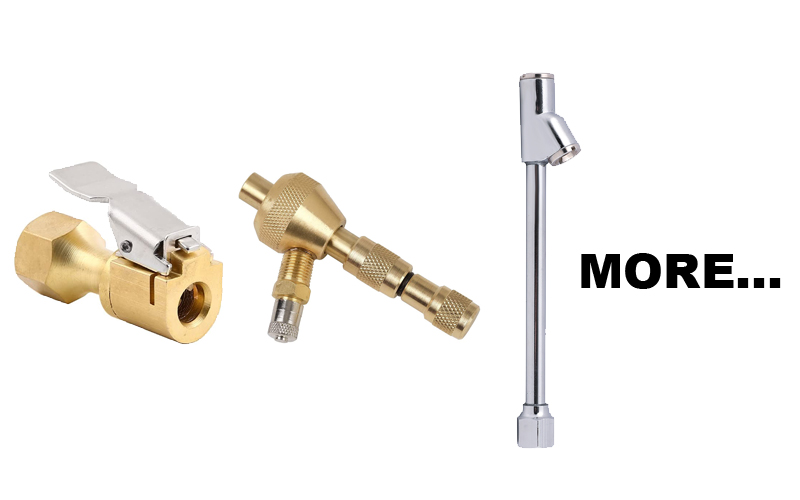
Not all valve stems are the same, and choosing a gauge with the right nozzle (chuck) ensures a tight seal and accurate readings. Here are the most common types:
-
Single-Head Chuck: The standard option, perfect for passenger cars (sedans, SUVs, hatchbacks) with easily accessible valve stems.
-
Long Rod Dual-Head Chuck: Designed for trucks, RVs, or vehicles with valve stems deep inside the wheel (hard to reach with a standard chuck). The long rod and dual heads make it easy to access tight spots.
-
Quick-Deflate Chuck: A must-have for off-roaders, 4x4 enthusiasts, and anyone driving in desert conditions. It lets you remove the valve core to deflate tires quickly (critical for off-roading) while still providing accurate pressure readings.
-
Other Specialty Chucks: There are also chucks designed for motorcycles, bicycles, and heavy-duty vehicles—always match the chuck to your vehicle type!
4. Pressure Release Valve: To Have or Not to Have?
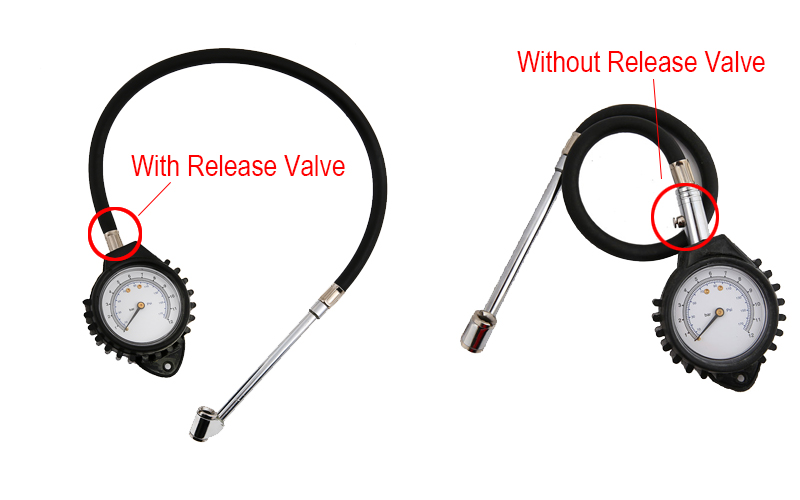
A pressure release (deflate) valve is a small but handy feature—here’s how it impacts your choice:
Gauges with a Deflate Valve
-
Pressure Retention (Hold) Function: After measuring, the gauge retains the pressure reading—so you can remove it from the valve stem and still check the number (no more rushing to read it mid-measurement).
-
Built-In Deflation: If your tires are overinflated, you can use the valve to release air gradually while monitoring the pressure—no need for a separate tool.
Gauges Without a Deflate Valve
-
No Pressure Retention: The reading resets as soon as you remove the gauge from the valve stem, so you have to read it quickly while it’s attached.
-
No Built-In Deflation: If you need to deflate overinflated tires, you’ll need a separate tire valve tool to press the valve core.
Final Buying Tips to Make the Right Choice
-
Consider Your Vehicle: Daily commuters can opt for a basic mechanical or digital gauge with a single-head chuck. Off-roaders need a quick-deflate chuck, while truck drivers need a long rod dual-head chuck.
-
Prioritize Accuracy: If you’re particular about tire pressure (e.g., for performance driving or fuel efficiency), go for a digital gauge with 0.5%–1% accuracy.
-
Think About Convenience: If you want one-hand operation, choose a hose-free gauge. If you hate rushing to read the display, pick one with a pressure retention function.
-
Budget Wisely: Mechanical gauges are great for tight budgets, while digital gauges are a small upgrade for better ease of use.
At the end of the day, the best tire pressure gauge is the one you’ll use regularly. Choose a tool that fits your vehicle, habits, and budget—and you’ll be well on your way to safer, more efficient driving. Do you have a favorite tire pressure gauge? Share your thoughts in the comments below!