
Understanding the Basics of an Air Hose
An air hose is an essential tool in various industries, from automotive repair to construction sites, serving as a conduit for compressed air to power pneumatic tools and equipment. This versatile component ensures efficient airflow, making tasks like inflating tires or operating sandblasters smoother and more productive. Whether you're a DIY enthusiast or a professional mechanic, selecting the right air hose can significantly impact your workflow. In this article, we'll explore the fundamentals of air hoses, focusing on popular variants like the rubber air hose and PVC air hose, to help you make informed choices.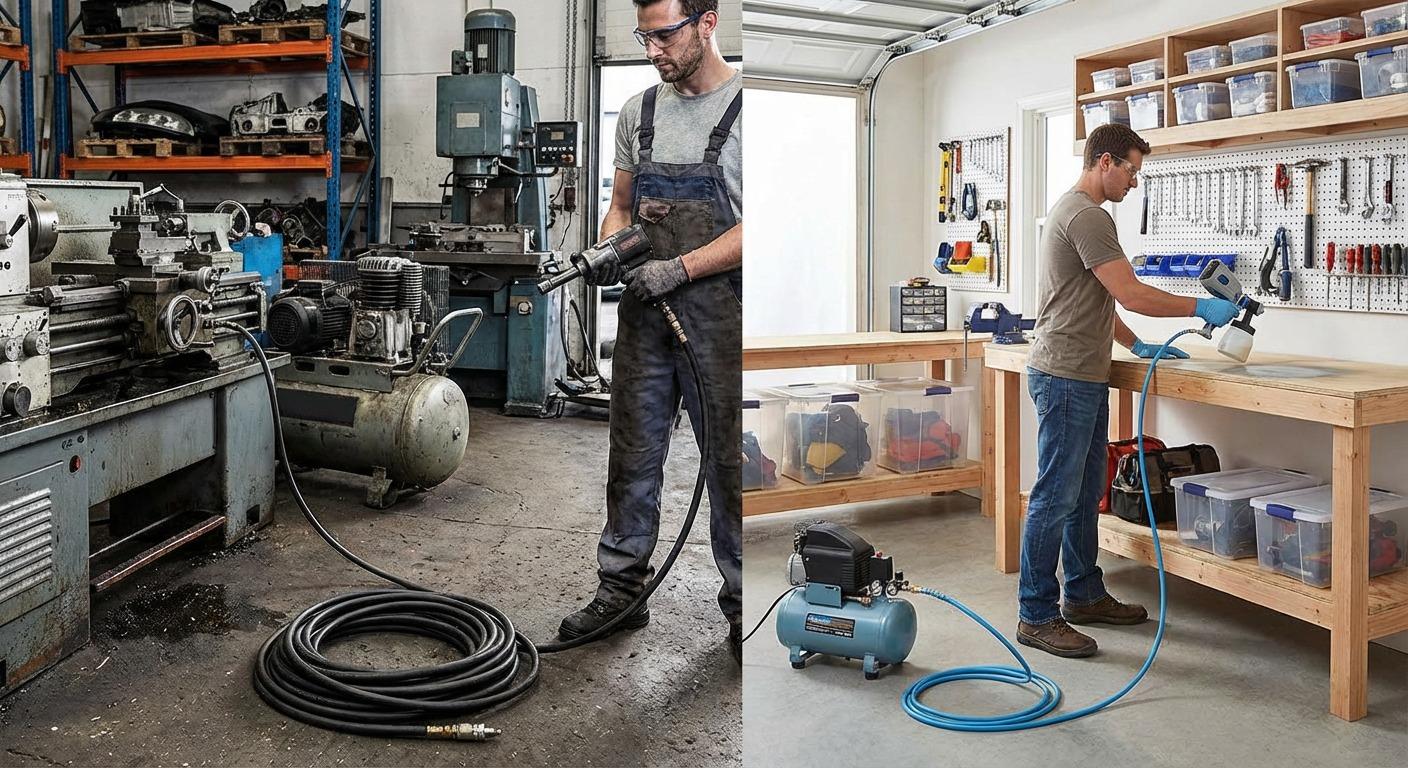
Key Features of Rubber Air Hoses
A rubber air hose stands out for its durability and flexibility, making it a top choice for demanding environments. Constructed from high-quality rubber reinforced with textile braids or wire spirals, this type of hose can withstand high pressures up to 300 PSI, ideal for heavy-duty applications. The rubber air hose excels in cold weather, remaining pliable even in sub-zero temperatures, which prevents cracking and ensures consistent performance during winter projects. Its thick walls provide excellent resistance to abrasion and punctures, extending its lifespan in rugged settings like workshops or outdoor construction. Additionally, the rubber air hose often features oil and chemical resistance, protecting it from lubricants and solvents commonly found in garages. For users handling frequent kinking or bending, the rubber air hose's inherent flexibility reduces downtime, as it bounces back to its original shape easily. Safety is another advantage; the material's toughness minimizes burst risks, providing peace of mind during high-pressure operations. When comparing options, the rubber air hose's weight—typically heavier than alternatives—translates to superior longevity, often lasting years with proper care. Maintenance involves rinsing after use to remove debris and storing it coiled to avoid permanent bends. Overall, investing in a quality rubber air hose pays off in reliability and reduced replacement costs.
Benefits of PVC Air Hoses for Everyday Use
In contrast, the PVC air hose offers a lightweight and cost-effective solution for lighter tasks, appealing to hobbyists and small-scale operations. Made from polyvinyl chloride, this hose is engineered for moderate pressures around 200 PSI, sufficient for inflating air mattresses, cleaning with air blowers, or powering small paint sprayers. One of the standout features of the PVC air hose is its affordability, allowing users to equip multiple stations without breaking the bank. Its smooth interior promotes efficient airflow with minimal resistance, ensuring tools receive consistent pressure for optimal performance. The PVC air hose is also highly portable, weighing up to 50% less than rubber counterparts, which makes it easy to maneuver in tight spaces or transport to job sites. Environmental resistance is a plus; it performs well in humid conditions and resists UV degradation when stored properly, though it's best kept out of direct sunlight. Flexibility across a wide temperature range—from 0°F to 140°F—means the PVC air hose adapts to seasonal changes without becoming brittle. For those concerned about ease of use, its kink-resistant design, often enhanced with reinforcing coils, prevents frustrating interruptions during work. However, for extreme heat or chemical exposure, the PVC air hose may require protective sleeves. Regular inspections for wear and avoiding over-tight coiling will maximize its utility. In summary, the PVC air hose strikes a balance between performance and economy, making it indispensable for casual and semi-professional applications.
Comparing Rubber and PVC Air Hoses: Which One Fits Your Needs?
Choosing between a rubber air hose and a PVC air hose depends on your specific requirements, such as pressure demands, environment, and budget. The rubber air hose shines in industrial settings where robustness is key; its superior puncture resistance and longevity justify the higher initial cost for professionals who need dependable equipment that endures rough handling. For instance, in automotive shops dealing with oily floors and heavy machinery, the rubber air hose's chemical resistance prevents degradation, reducing safety hazards. On the other hand, the PVC air hose is preferable for home garages or light construction, where portability and low weight are priorities. Its ease of storage and quick setup save time for weekend warriors tackling painting or cleaning projects. Pressure ratings play a crucial role—rubber options handle higher bursts, making them safer for tools like impact wrenches, while PVC suffices for low-demand uses like airbrushing. Temperature tolerance also factors in; rubber holds up in extremes, whereas PVC performs reliably in moderate climates. Cost-wise, PVC air hoses are budget-friendly, often available in various lengths from 25 to 100 feet, allowing customization without excess expense. Both types come with standard fittings like brass couplers for universal compatibility, but ensuring proper sizing—typically 1/4-inch or 3/8-inch inner diameter—matches your compressor's output is vital for efficiency. Hybrid options blending rubber and PVC layers exist for balanced performance, offering flexibility with added durability. Ultimately, assess your usage frequency and conditions: opt for rubber air hose for intensive, long-term use, and PVC air hose for occasional, versatile tasks.
Maintenance and Safety Tips for All Air Hoses
Regardless of whether you choose a rubber air hose or PVC air hose, proper maintenance is essential to ensure safety and extend service life. Start by inspecting for cracks, bulges, or fittings looseness before each use, as these can lead to dangerous bursts under pressure. Drain moisture from the line after operation to prevent internal corrosion, especially in humid environments. Store hoses coiled on reels or hung to avoid ground abrasion, and keep them away from sharp edges or extreme heat sources. For rubber air hoses, apply a protective coating periodically to combat ozone damage, while PVC air hoses benefit from gentle cleaning with mild soap. Always wear protective gear like gloves and eyewear when handling pressurized systems, and never exceed the manufacturer's rated PSI to avoid accidents. In workshops, secure hoses to prevent tripping hazards, and use quick-connect fittings for safe, rapid tool changes. By following these practices, your air hose—be it rubber or PVC—will deliver reliable performance for years, enhancing productivity while minimizing risks.
Applications and Innovations in Air Hose Technology
Air hoses continue to evolve, with innovations improving efficiency across sectors. In manufacturing, rubber air hoses integrate with automation systems for precise pneumatic control, powering robotic arms with minimal energy loss. The PVC air hose finds favor in agriculture for irrigation and dusting tools, its lightweight design easing farmer mobility. Emerging trends include eco-friendly materials, like recycled rubber for sustainable rubber air hoses, reducing environmental impact without sacrificing strength. Smart features, such as pressure-monitoring sensors embedded in hoses, alert users to issues via apps, preventing downtime. For marine applications, UV-resistant PVC air hoses withstand saltwater exposure, aiding boat maintenance. As industries push for higher efficiency, hybrid air hoses combining rubber durability with PVC flexibility are gaining traction, offering customizable options for specialized needs. Whether upgrading your setup or exploring new uses, understanding these advancements ensures you stay ahead in pneumatic technology.