
1. Core Function of Tire Depth Gauge: More Than "Measuring Depth" – It’s a Safety Early Warning Device
Tire tread depth directly determines rainwater drainage, wet-road grip, and braking distance, and a tire depth gauge is the "magic tool" for accurately monitoring this critical indicator. Its core value lies in two aspects:
• Safety Baseline Control: According to the national standard GB 7258-2017, the minimum allowable tread depth for passenger car tires is 1.6mm, for trucks/buses it’s 2.0mm, and for motorcycles only 0.8mm. A tire depth gauge can intuitively determine whether the tire has reached the mandatory replacement standard, avoiding risks such as tire blowouts and hydroplaning.
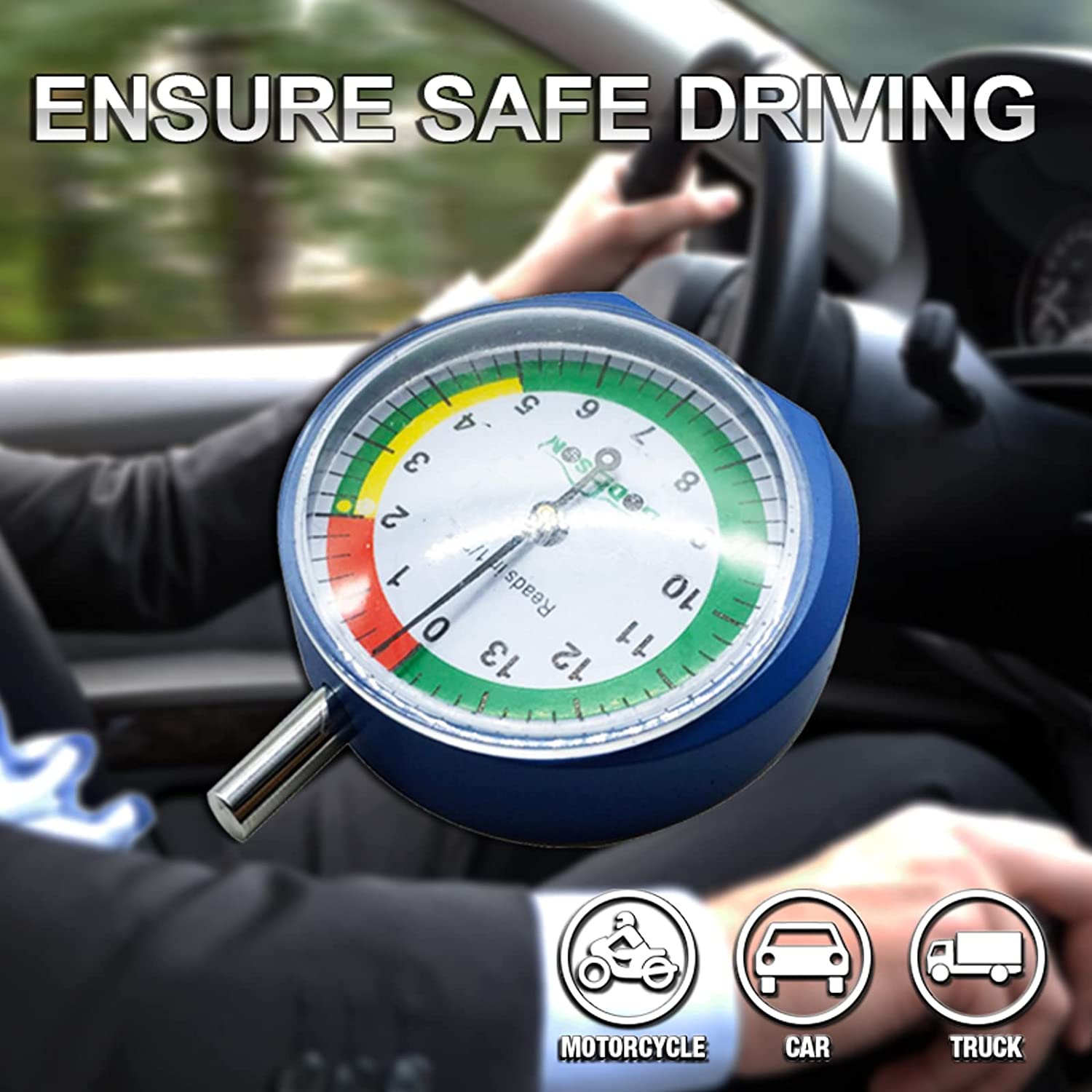
• Maintenance Timing Prediction: When the measured value is between 2.5-3.5mm, tire performance begins to decline, and inspection frequency should be increased; when it’s below 2.5mm, the wet-road braking distance may extend by 30%-40%, so replacement should be planned in advance instead of waiting until the wear limit for emergency handling.
(Diagram Suggestion: Divide into four color blocks – "Good (≥3.5mm)", "Normal (2.5-3.5mm)", "Early Warning ( "Limit (≤1.6mm)" – with corresponding driving recommendations labeled)
2. 3-Step Standard Usage: Achieve Error-Free Measurement Results
Whether it’s a digital or dial-type tire depth gauge, correct operation is essential to ensure accurate data. The steps are as follows:
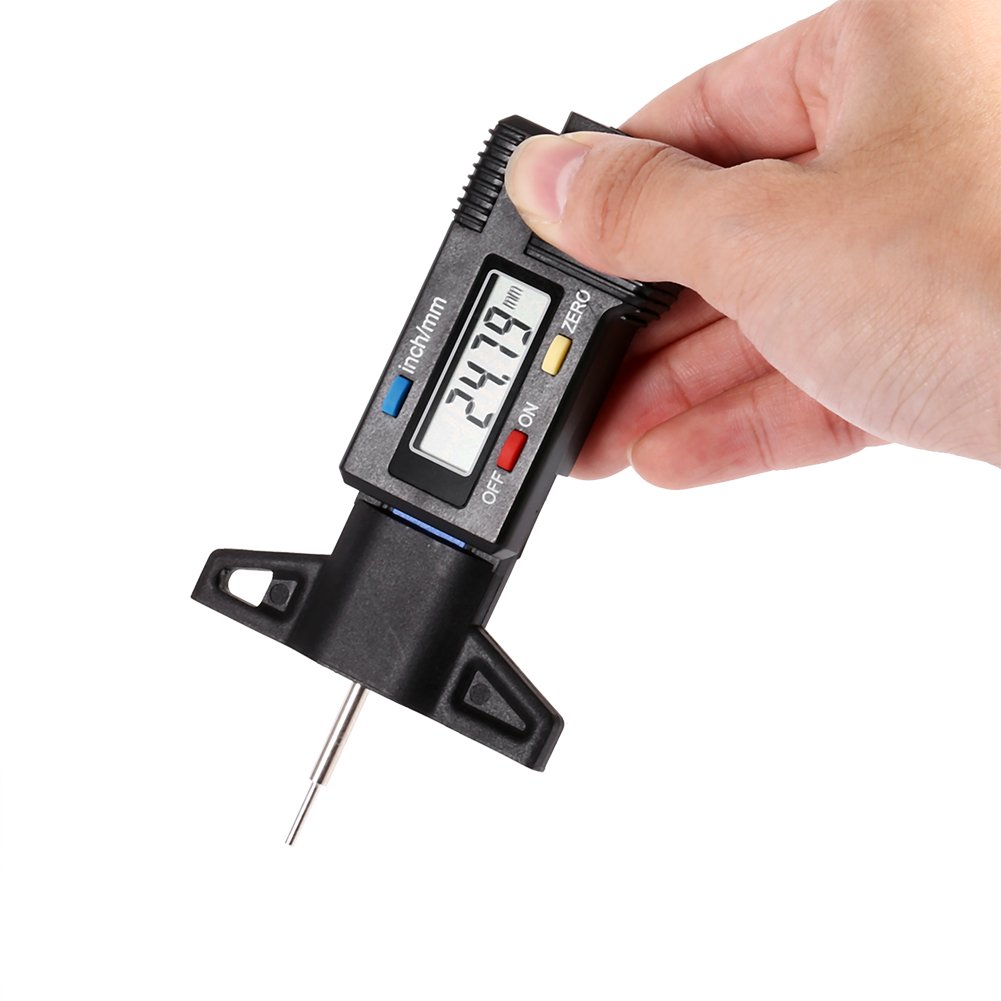
1. Pre-Measurement Preparation: Clean debris such as stones and soil from the tire tread grooves to ensure the tread is dry; park the vehicle on a flat surface with the tires under natural load to avoid inclined measurement; for digital gauges, turn on and zero-calibrate, and for dial-type gauges, confirm that the "0" scales of the main and auxiliary rulers are aligned.
2. Precise Measurement Operation: Hold the tire depth gauge, insert the measuring probe vertically into the main tread groove (avoiding abnormally worn areas in the groove) until the probe touches the bottom of the groove, ensuring the gauge is perpendicular to the tread (preventing inclined insertion from causing low readings). Each tire needs to be measured at 3 key positions: the middle of the tread, the shoulder, and near the sidewall, with 2-3 repeated measurements at each position.
3. Result Interpretation and Recording: Take the average of all measured values as the final result, and judge the tire status by comparing it with the standards for the vehicle type. For example, if the measured value of a family car is 1.5mm, which is below the 1.6mm limit, the tire must be replaced immediately.
(Diagram Suggestion: 3 separate images showing "Cleaning Tread Grooves", "Vertical Insertion Measurement", and "Reading Values", with key operation points labeled)
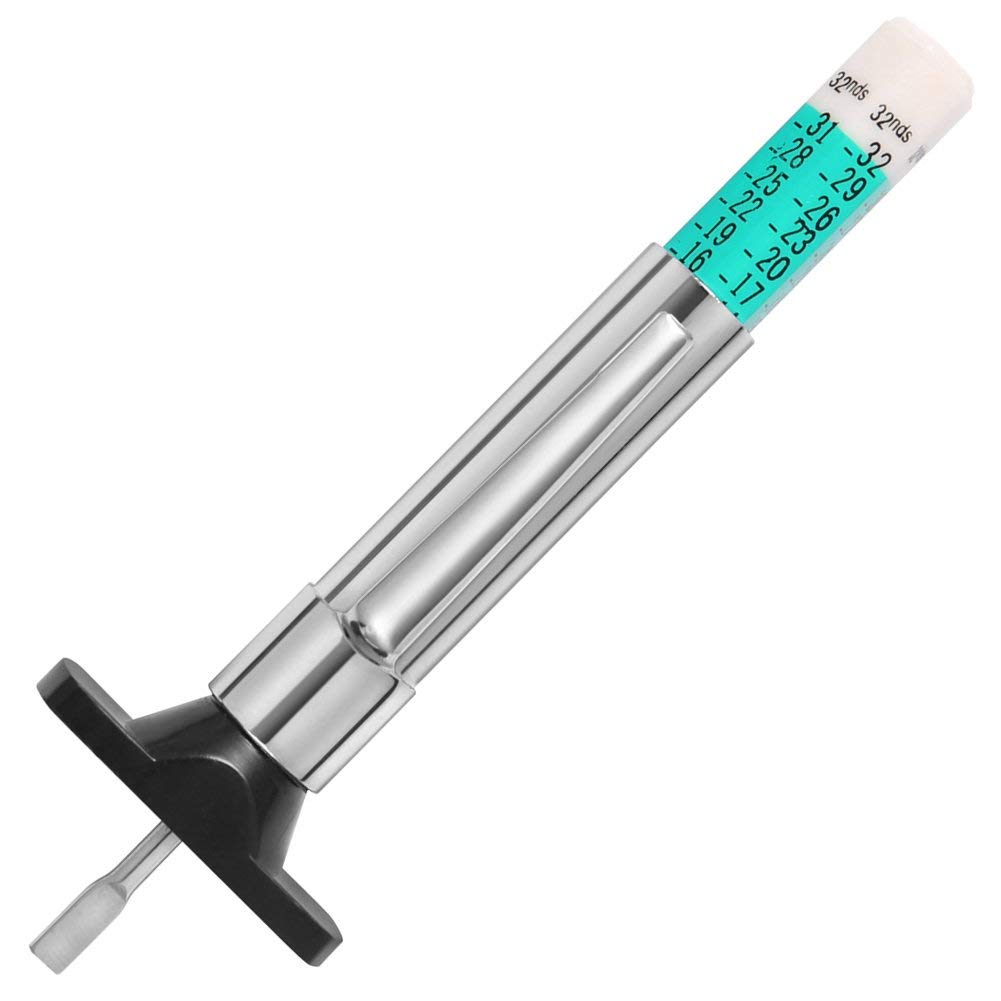
3. Buying Guide: Get It Done for Only 3-7, Focus on 3 Key Points
There’s no need to pursue high prices when choosing a tire depth gauge. Focus on the following 3 core dimensions to easily select a cost-effective option:
• Precision First: Prioritize models with a measurement accuracy of ≥0.1mm. Digital displays are more intuitive, suitable for beginners; dial-type gauges are simple to operate and durable, ideal for cost-conscious car owners.
• Material and Design: Prefer stainless steel materials for high probe hardness and resistance to deformation; scales should be clear and easy to read – digital screens with moderate brightness and dial-type scales with strong contrast to avoid being unreadable in strong light.
• Compatibility: The measurement range should be ≥30mm (covering the tread depth range of most tires), and the probe tip should be slender to fit tires with narrow tread grooves (such as some performance car tires).
(Diagram Suggestion: Display 2-3 mainstream models with core selling points labeled, such as "0.1mm Precision", "Stainless Steel Material", "Digital Display", and reference prices in the 3-7 range)
https://www.godesontools.com/#